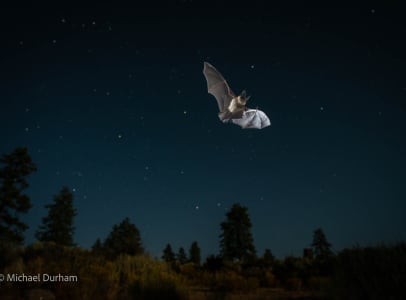
New technology unravels a once-mysterious flight route in Africa.
08.14.26
By Alyson Brokaw
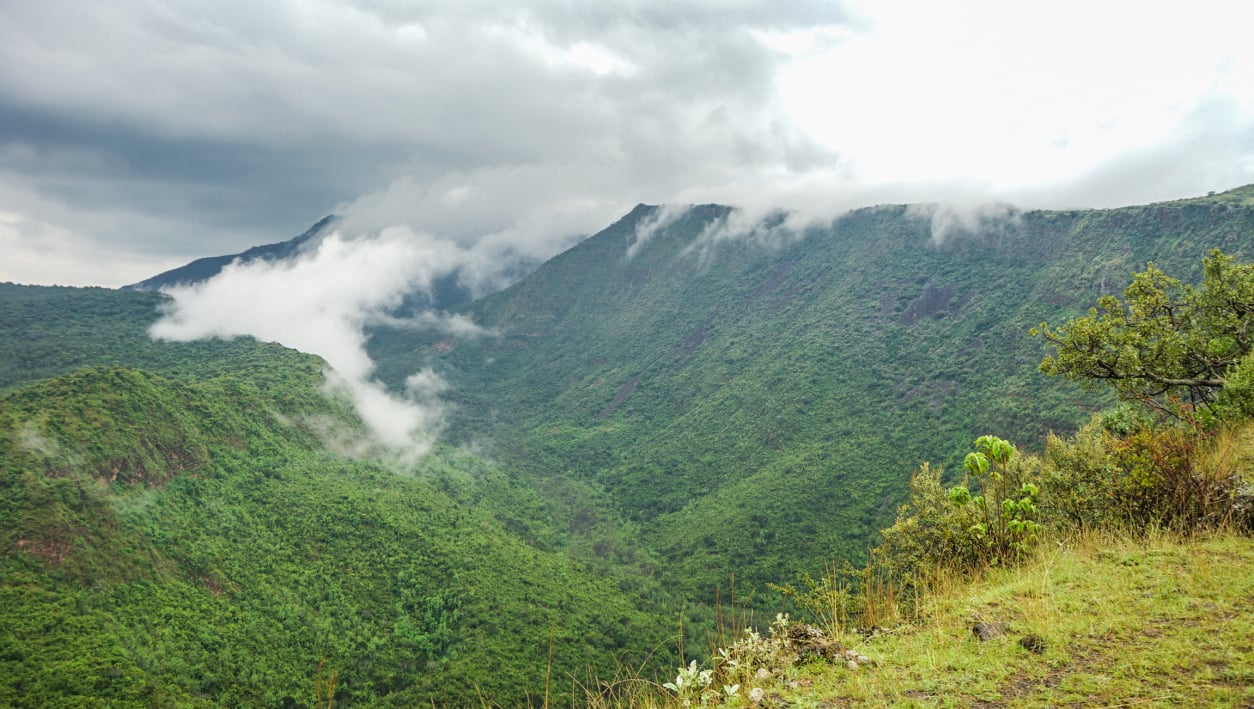
High above Kenya’s Great Rift Valley, one of Africa’s most elusive and least understood bats takes to the skies each night. Exactly where they go remains a mystery, one that a cross-sectional team of researchers (including scientists from BCI) are trying to solve.
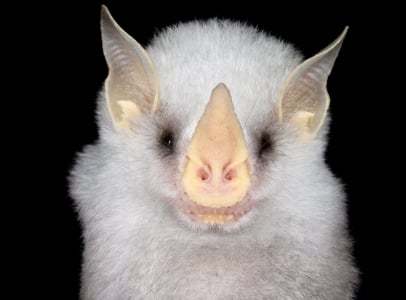
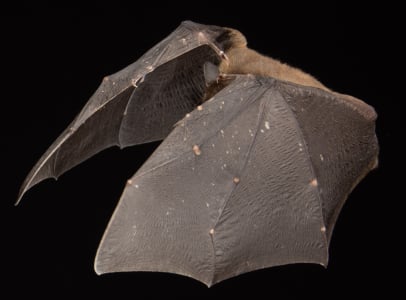
With an upturned, pig-like snout and large, forward-facing ears, Harrison’s large-eared giant mastiff bat (Otomops harrisoni) — often simply referred to as Otomops — looks a bit like a bulldog with wings. High fliers with unique cream and brown coloration, their preference for hard-to-reach mountain and lava caves has made them challenging to study. While they are found across multiple East African countries, we only know of a few roost sites. Considered Threatened by the IUCN, and facing habitat loss, cave disturbance, and wind energy development, it is increasingly important to understand how and where this bat lives.

In May of 2026, a team of researchers including BCI scientists Dr. David Wechuli (Kenya Program Manager), Dr. Isabella Mandl (Regional Director, Africa and South Asia) and Dr. Teague O’Mara (Director of Conservation Evidence) visited two major roost sites for Otomops in southern Kenya. To gain a better understanding of how these bats use the landscape, they started with the extensive lava tube cave system of Mount Suswa. A broad shield volcano, with rugged terrain of black volcanic rock outcroppings, steep crater walls, and open grasslands, the mountain and associated caves are located within the Mount Suswa Conservancy, a community-owned conservancy in southern Kenya.
“Because these bats routinely travel long distances across national borders, protecting them means conserving both their cave roosts and the wider landscape.”
Dr. Wechuli describes being inside the caves at Mount Suswa as an “unforgettable atmosphere, filled with the sounds of wingbeats and bat calls.” While rewarding, working in the caves is also challenging — traversing uneven lava rock, carefully navigating thick deposits of bat guano that make the cave floor slippery, and battling through dense clouds of cave flies.

The team captured around 65 bats in the cave, carefully fitting them with GPS tags. As a bat goes about its normal business, these small, lightweight devices communicate with GPS satellites to record the bat’s locations for several days before naturally falling off. From these data, researchers can reconstruct the bat’s flight path, documenting how far and fast it flies and what habitats it uses before returning to its cave roost.
For years, this type of research has been limited by one major challenge. To keep the GPS tags small and light enough for a bat, the devices have limited battery power and data storage. To download the data, researchers would have to physically recover the dropped tags, most of which are never found. As part of efforts to improve the ability to track bats, this expedition piloted use of a new tag equipped with an ultra-high frequency (UHF) radio signal. When a tagged bat is within range of a UHF base station placed in the cave, the data on the tag gets wirelessly transmitted for later download. This means researchers can ensure more reliable data collection, even if the dropped tag is never recovered.

Data from the May expedition is already surprising researchers. Bats roosting at the Mount Suswa caves travel much farther than expected, moving over 200 kilometers (124 miles) across the greater Serengeti ecosystem between Kenya and northern Tanzania in a single night. As these bats hunt for moths and other insects over these vast areas, they are contributing important ecosystem services like pest suppression. Use of these large areas also highlights the importance of considering the landscape corridor for conservation and management.
Discovering this exciting information — and protecting the bats themselves — wouldn’t be possible without local Bat Guardians. Community members employed by Mount Suswa Conservancy, the Bat Guardians are champions of conservation and integral parts of the conservation and research process. They also help monitor the bat colonies, guide visitors safely through the cave systems, educate about the importance of bats, and report threats to the caves. Their knowledge of the landscape, connections to the community, and year-round stewardship make research like this possible.

About 160 miles southeast of Mount Suswa Conservancy is Chyulu Hills National Park, the only other confirmed major cave-roosting site currently known for Otomops in Kenya. The lava tube caves here are home to some of the biggest aggregations of Otomops. Colony sizes vary among caves, ranging from tens of thousands to more than one million bats. Important future steps also include expanded monitoring at both roosts to get better estimates for population sizes, presence, and diversity of other bat species while assessing the health of the bats at these sites. The hope is that data from the GPS-tagged bats will help scientists better understand how these two important roost sites are connected, as well as uncover previously unknown colonies or roosts.

Understanding how these known roosts connect to the larger landscape is important for ensuring the long-term survival of these enigmatic bats. Geothermal and wind energy development, uncontrolled tourism, and charcoal production continue to threaten bat habitat. As Dr. Wechuli points out, “because these bats routinely travel long distances across national borders, protecting them means conserving both their cave roosts and the wider landscape. Continued collaboration among local community members, researchers, government agencies, and conservation organizations will be essential for securing the future of this remarkable, but vulnerable species.”
Understanding how these known roosts connect to the larger landscape is important for ensuring the long-term survival of these enigmatic bats.

This year’s expedition is helping set the stage for those future collaborations. Additional analysis of the GPS tracking data will help fill in knowledge gaps about the species and inform practical conservation actions. “It is equally important to continue to build stronger partnerships in the region, like Mount Suswa Conservancy, the local community, and other conservation organizations,” notes Dr. Paul Webala, professor at Maasai Mara University and co-lead of the project. Together, these efforts promise to not only reveal more about one of Africa’s most mysterious bats but also help ensure its healthy future.
Alyson Brokaw, PhD is a behavioral ecologist, sensory biologist, science communicator, and a regular contributor to The Bat Pub. When not talking about bats, she can be found cuddling with her dog, exploring her local Pennsylvania woods and throwing plastic on the ultimate frisbee field.
This project was funded by the BAND Foundation.

David Wechuli, Ph.D. – Kenya Program Manager
Based in Kenya, David has long-term experience in working with local community-based organizations, leading outreach and conservation activities focused on Kenyan bats and communities. As BCI’s program manager for Kenya, he is in charge of implementing the on-the-ground work for the conservation of endangered bat species and threatened habitats. His passions also include promoting community education and improving people’s livelihoods.
David holds a PhD in Conservation Biology from the University of Cape Town, South Africa, specializing in bat behavioral ecology. Through his research, he investigated variation in echolocation call intensity and detection distance across an environmental gradient for bat assemblages.

Teague O’Mara, Ph.D. – Director of Conservation Evidence
Dr. Teague O’Mara serves as the Director of Conservation Evidence. He leads efforts across Bat Conservation International to conceptualize, execute, and interpret conservation actions, and provide evidence-based results for conservation of global bat populations.
Teague has more than 15 years of experience studying animal behavior, movement, physiology, and conservation across the globe. He has published more than 30 scientific research papers and is a recognized global expert on bat movement and behavior. Prior to joining BCI his research focused on the behavioral and physiological strategies that bats use to counter unpredictable environments. He applies a data-driven process to understand the interaction between bats and their environment to better plan effective conservation strategies.
Teague is an Assistant Adjunct Professor of Biology at Southeastern Louisiana University and is a Research Associate at the Max Planck Institute of Animal Behavior and the Smithsonian Tropical Research Institute. He received his Ph.D. from Arizona State University and a bachelor’s degree from Grand Valley State University.
Email: [email protected]

Isabella Mandl, Ph.D. – Regional Director, Africa & South Asia
Isabella has been working on research projects to support the protection of threatened species on
Madagascar and Comoros since 2013. She is a passionate conservation biologist who, besides
highlighting the importance of working with local communities, believes that understanding animal
behaviour is a key component for successful conservation management. Eager to provide support
where she can, Isabella acts as a mentor for students and early career scientists across Africa.
At BCI, Isabella leads the Livingstone’s fruit bat conservation project. She set up a study on the
species’ movements and is responsible for implementing research and survey protocols, with the
goal of understanding how the fruit bats use the landscape. The insights gained through this project
will be applied in conservation measures, preventing this important species from going extinct.

Senior Lecturer of Wildlife Biology at Maasai Mara University, Kenya. Dr. Webala is currently the Chair of Bat Conservation Africa. He uses bats as a focal group to understand and interrogate processes that drive rarity and abundance of mammals in natural, and human-dominated, environments. He is primarily a community ecologist, although his research addresses a variety of important questions for improving bat conservation in Africa. His research also spans several subfields of biology, as his work examines behavioral, ecological and systematic/ taxonomic questions. He has authored a number of publications on bat ecology, taxonomy and conservation.