A love letter to the ecological balance between bats and their native environments.
02.13.25

A love letter to the ecological balance between bats and their native environments.
By Marina Richie
Whirling in moonlight and stars, spotted bats fly in a dance of clicks and buzzes. Opening their mouths, they fire ultrasound pulses at shrieking high decibels that would make a human ear flinch. (Spotted bats are one of the few bats that use echolocation frequencies low enough to be audible to humans.) But bats don’t mind. They simply contract muscles in the middle of their large, flared ears for protection. In fact, their translucent pink ears, nearly as long as their bodies, are the largest of any bat found in the United States. So sensitive are their ears to the returning echoes, bats “see” the shape, position, and location of the moths they prey upon.

As dusk falls to darkness above a meadow laced by a bubbling creek, salmon-hued clouds swim across a sky river. Bats are the flying mammals of the night, flapping wings that are forelegs stretched into skin. Spotted bats (Euderma maculatum)wheel, somersault, and scoop up moths with their tails. In turn, moths evade bats like stunt pilots performing barrel rolls, loops, and steep dives. These moths are part of an exclusive diet, captured high above the ground.
Far below the moonlit dance of bats and moths are the native bunchgrasses and shrubs, essential to the future of both.
The future of spotted bats is twinned with moths that pollinate many flowers. Moth caterpillars depend on native plant hosts. Far below the moonlit dance of bats and moths are the native bunchgrasses and shrubs, essential to the future of both.
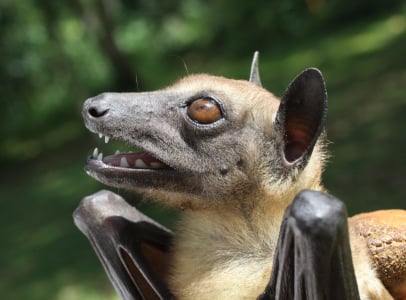
Although not endangered, these spotted mammals are one of America’s least known animals. Initially thought to be extremely rare, the spotted bat is now known to occupy a rather large range throughout central western North America from southern British Columbia to northern Mexico. To ensure there will always be a call and an echo, take a stand for bats, their prey, and their habitats.
Listen to the Spotted Bat call

Experts now estimate that 52 percent of bat species in North America are at risk of populations declining severely in the next 15 years. This includes rare spotted bats, seeking night roosts in cliffs, caves, canyon walls, and trees adjacent to meadows. They pursue moths above meadows and along lush streamsides. Pollinators and spotted bats dwell in a dynamic balance. So do we all.
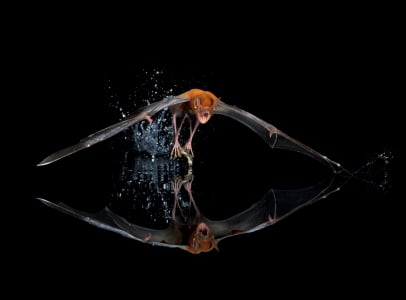
The only mammal that can truly fly, bats echolocate, sing complex tunes, eat half their body weight in insects each night, reseed forests, pollinate flowers, and are responsible for tequila and chocolate in our lives.
Bat Power
More than 1,400 species of bats across the planet inhabit the realm of impossibility. The only mammal that can truly fly, bats echolocate, sing complex tunes, eat half their body weight in insects each night, reseed forests, pollinate flowers, and are responsible for tequila and chocolate in our lives.
Bats face threats from white-nose syndrome, pesticide spraying, roost disturbance, and logging trees that serve as roosts. Bats need us to show our power to keep them safe.