A beautiful bevy of bats south of the border.
09.09.26
By Paul Hormick
The country most associated with tacos, tequila, and sombreros is also a land of bats — with 135 distinct species who call the mountains, forests, and deserts of Mexico home. Of all these wonderous winged mammals, which ones might you encounter in the ancient land of the Aztecs?
Jamaican Fruit-eating Bat
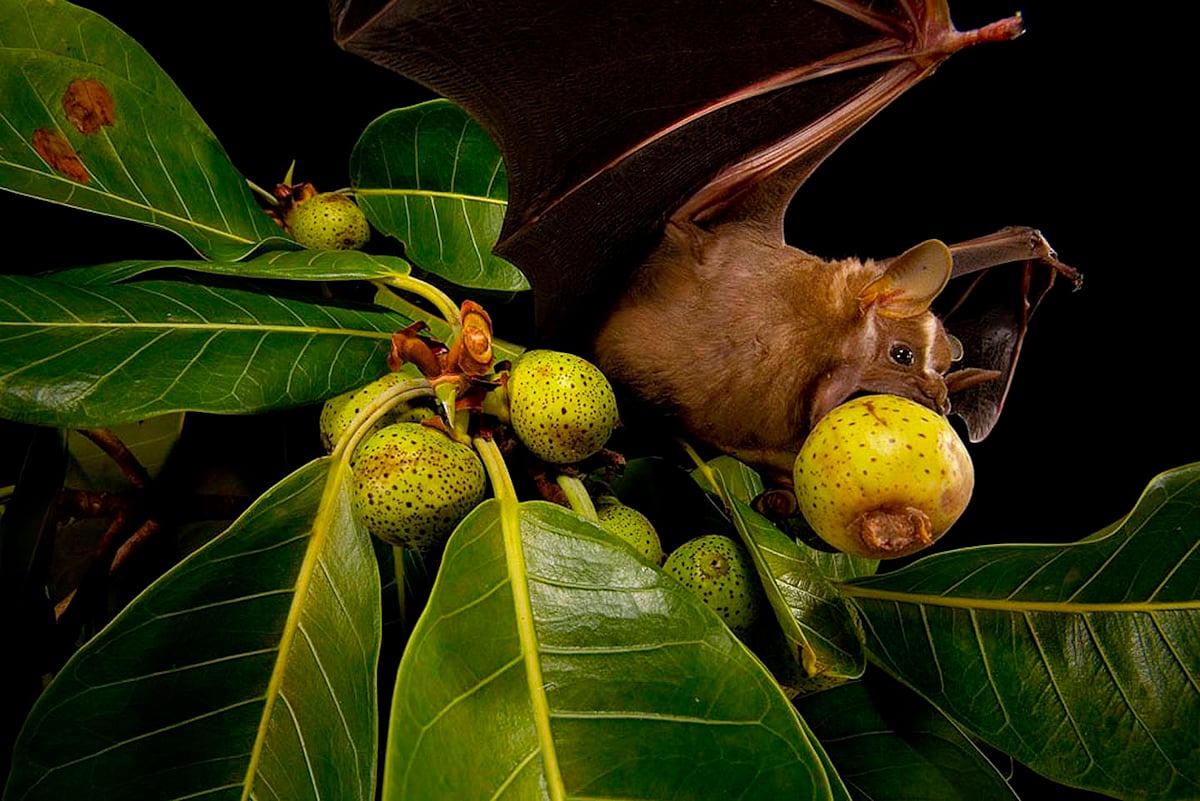
Jamaican fruit-eating bats (Artibeus jamaicensis) live in diverse habitats, from lush cloud forests to dry, deciduous woodlands throughout central and southern Mexico, Central America, Columbia, Venezuela, Ecuador, and the islands of the Caribbean, including (you guessed it) Jamaica. They roost in caves and hollow trees; they also fashion tent-like shelters for themselves from large leaves. These bats pluck, then carry fruit to roosts to eat and thus serve as important seed dispersers. This species also consumes pollen and nectar, with insects making up a small part of their diet. Females give birth twice a year, usually to a single pup.
Mexican Free-tailed Bat

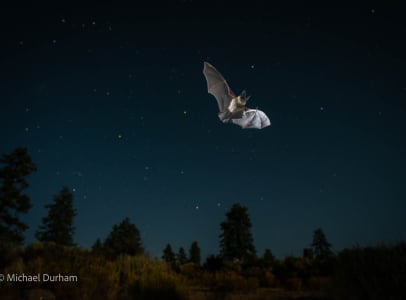
It’s a thrilling sight as millions of Mexican free-tailed bats (Tadarida brasiliensis) take to the summertime skies from Bracken Cave outside San Antonio, Texas and other sites throughout the American Southwest. During the cooler months of fall and winter, these insectivores migrate to Mexico and Central and South America. This undertaking may take little time, as this species is the swiftest of all bats. They can attain an average flight speed of 60 mph and have set the bat speed record of almost 100 mph.
Great Fruit-eating Bat

The great fruit-eating bat (Artibeus lituratus) has a membranous structure in its heart, which is found in no other mammal. Scientists are unsure what function the structure serves but have hypothesized it may keep the bat’s heart in the correct position while the bat roosts upside down. It may also serve in flight assistance or help this bat conserve energy. Great fruit-eating bats weigh in at little more than two ounces yet are surprisingly strong. They can carry fruit weighing as much as one third of their body weight.
Gray Sac-winged Bat
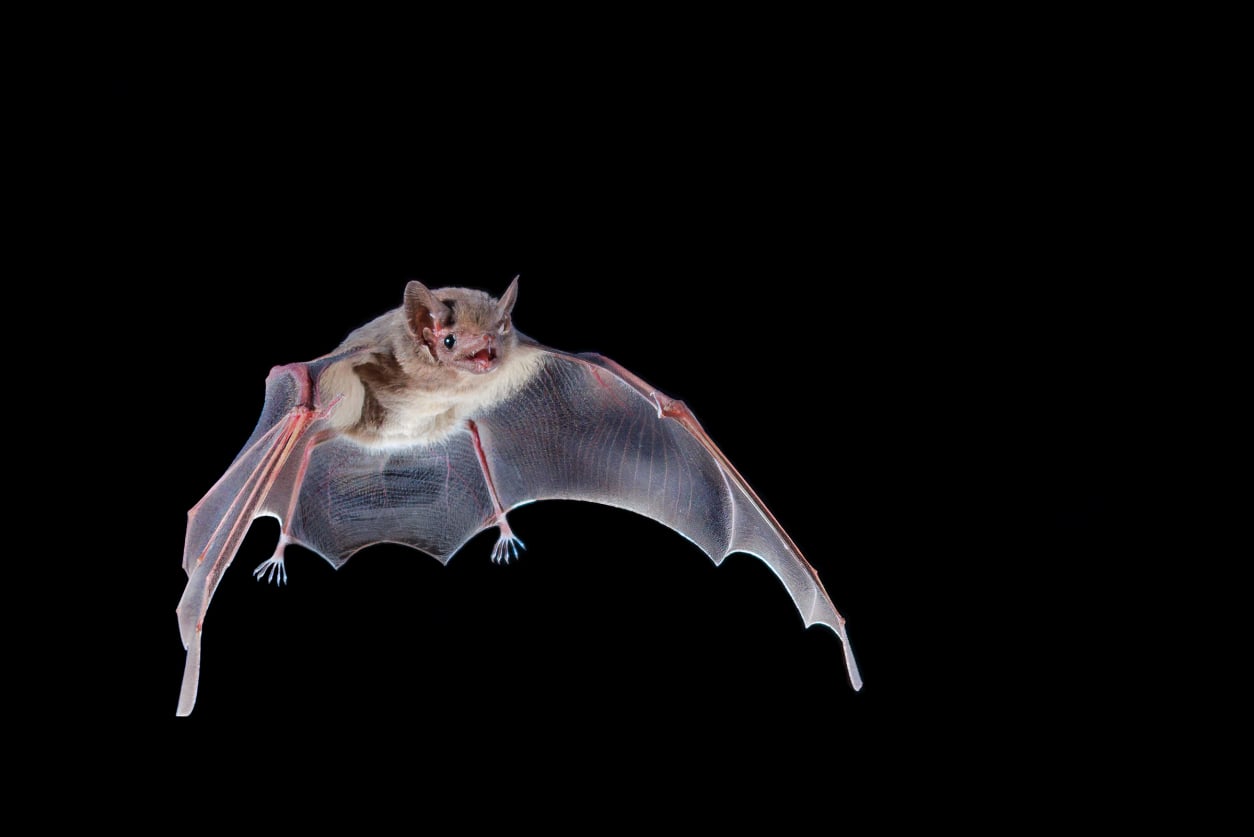
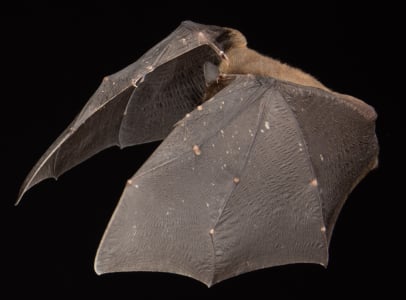
Another name for the family of sac-winged bats (Emballonuridae) is sheath-tailed bats, which is in reference to the membrane that stretches from ankle to ankle and which covers almost the entire length of these bats’ tails. Gray sac-winged bats (Balantiopteryx plicata) like to roost close to the mouths of caves, in barns, and in buildings close to a light source, usually in groups of about 50 and sometimes numbering as many as 10,000. This insectivore is found in arid climates from the southern tip of Baja and Northwest Mexico south through Central America.
Common Vampire Bat
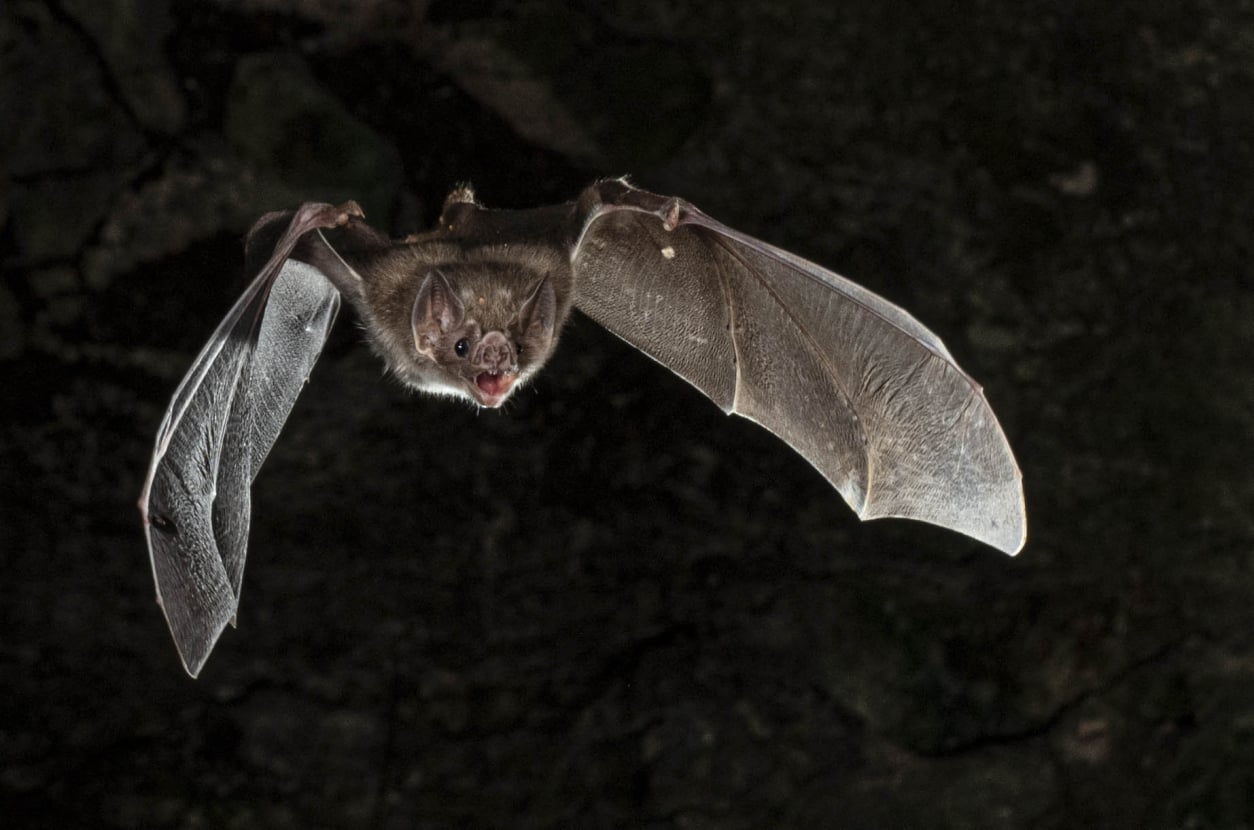
Everything about the common vampire bat (Desmodus rotundus) is adapted for them to get their bloody meals. Their agility in getting around on the ground lets them sneak up on their victims, which are usually large mammals, such as tapirs, or livestock, such as pigs, horses, and cows. Piercing skin with their razor-sharp incisors, they lap up blood flowing from the new wound, while an anticoagulant in their saliva prevents clotting (and has been developed into a medication that helps prevent strokes in humans). One of three extant bat species that drink blood, common vampire bats hunt their prey in tropical and subtropical woodlands, as well as open grasslands. They will roost with other bat species, usually in the darkest and highest places in trees, caves, abandoned buildings and mines. They tend to be the dominant species in these settings. And while that may all sound a bit gruesome, this species is well known for being social, often regurgitating food for friends and family who didn’t get enough to eat. They also groom each other!
Greater Sac-winged Bat
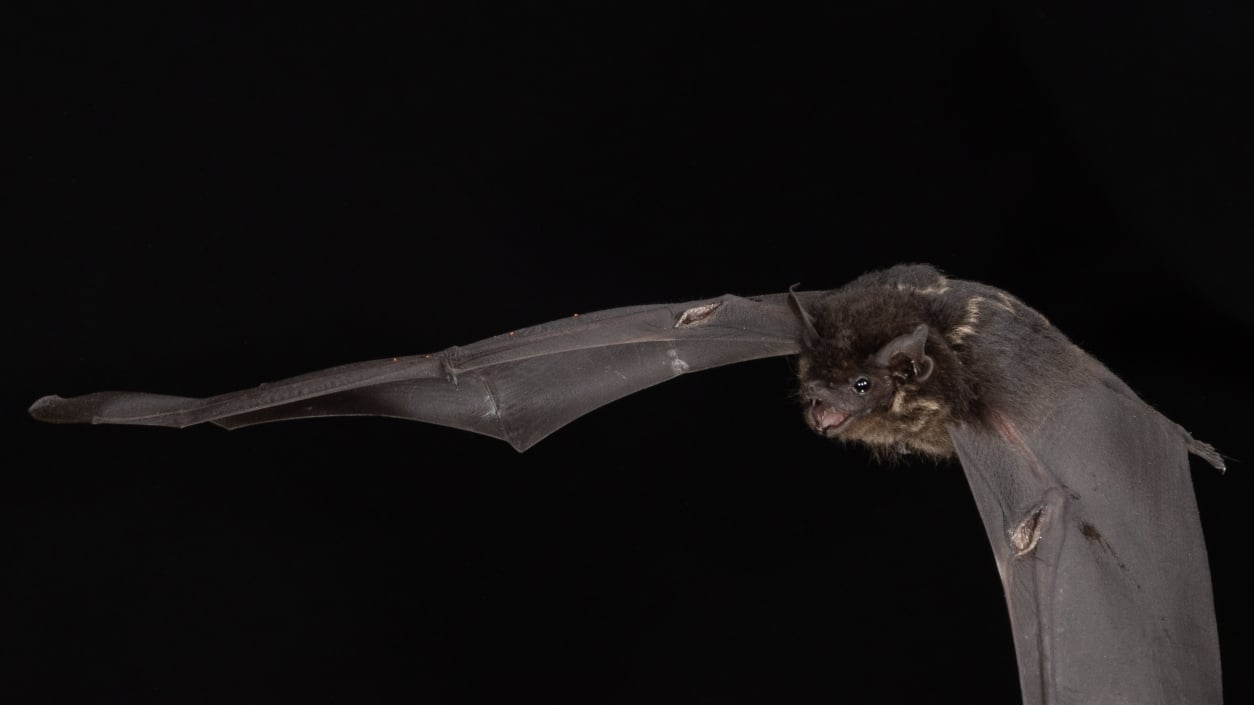
The courting ritual of the greater sac-winged bat (Saccopteryx bilineata) is, well . . . interesting. Males put drops of urine and glandular secretions into their sacs. While they are showing off for their female friends, the males hover in front of females, fanning vigorously to send the scent of the fragrant mixture her way. Males also ward off intruders by shaking this mixture towards bats outside their harem territory. They often roost on the outside of large trees in rainforests, where they feed on moths, flies, beetles, and butterflies. Pups make the equivalent of baby babbling noises, the first known example of mammal babbling outside of primates.
Lesser Dog-like Bat
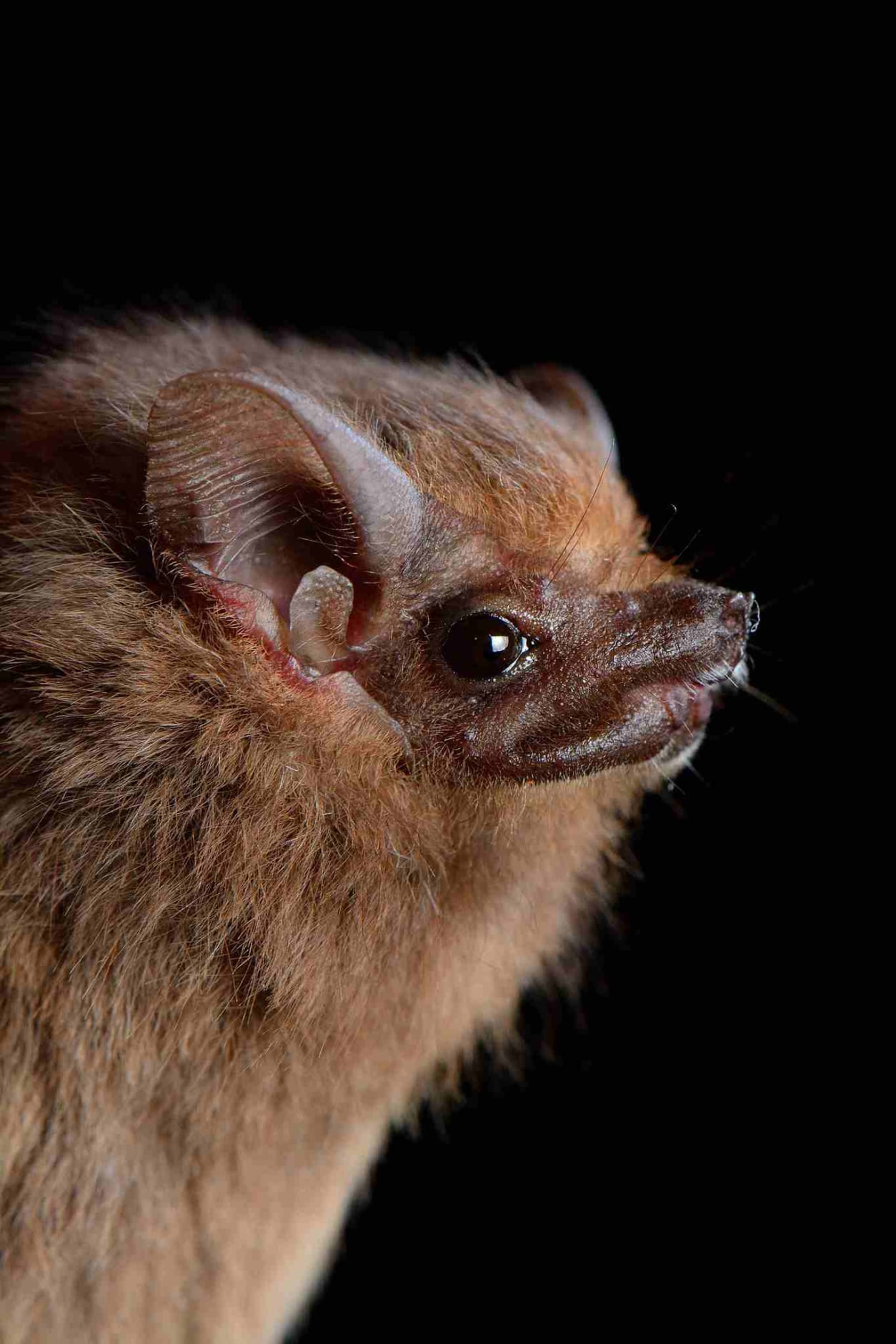
Dog-like bats, a genus of sac-winged bats, won’t play fetch, but with their long, hairless snouts, they do resemble puppy dogs. The lesser dog-like bat (Peropteryx macrotis), the smallest species of this genus, lives in the southernmost regions of Mexico — Oaxaca, Chiapas, and Yucatan — with its habitat stretching into southern Brazil. Their moderately long fur varies from grey to brown and can even appear reddish. Small colonies of these insectivores roost in caves and sometimes in old buildings. Lesser dog-like bats breed throughout the year, with females giving birth to a single pup at a time.
Mexican Long-tongued Bat
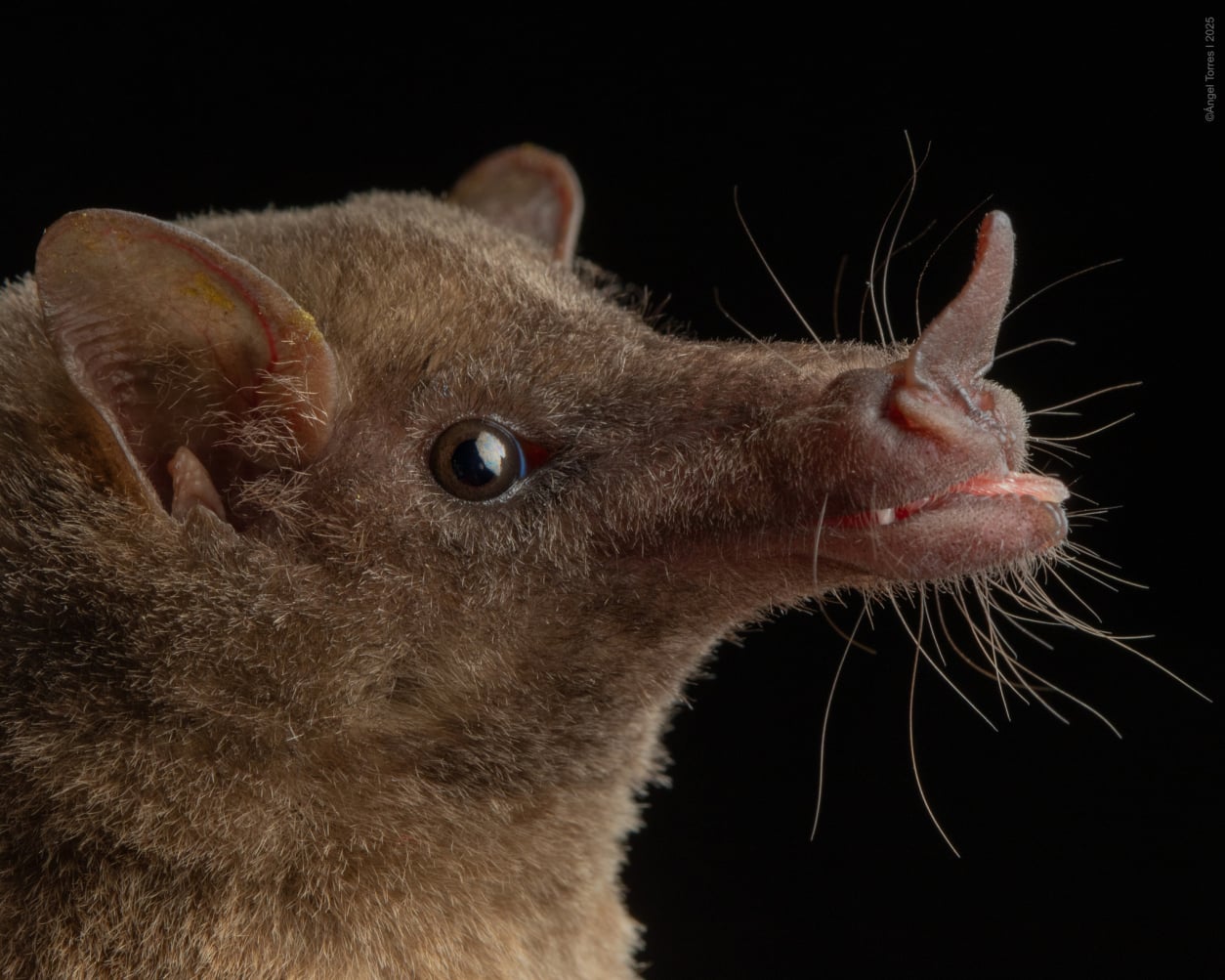
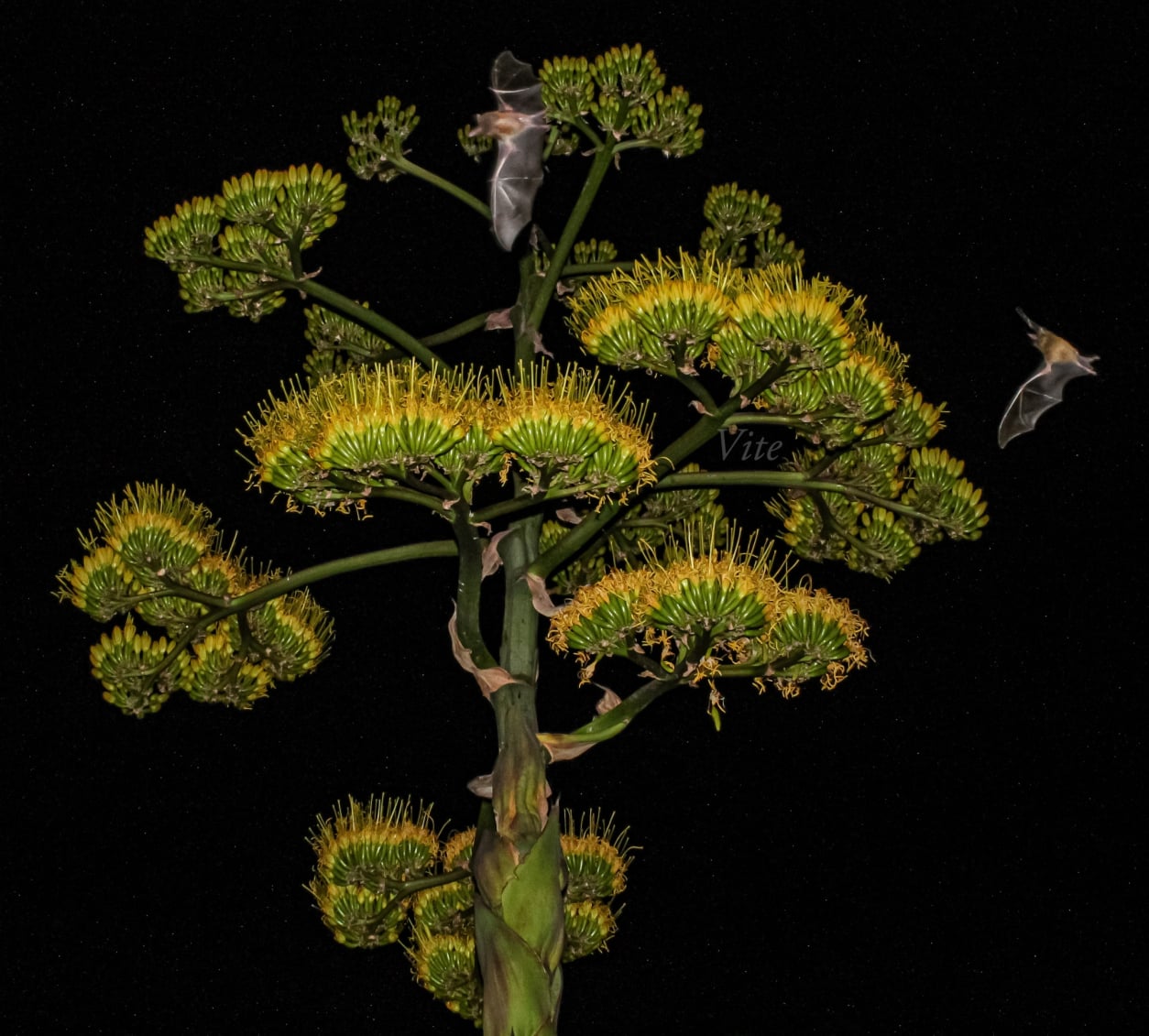
The Mexican long-tongued bat (Choeronycteris mexicana) really does have a very long tongue! Extending up to one third the length of its body, this bat uses its tongue to reach deep inside blooms. The tongue is covered with small hair-like papillae to gather the nectar. This Gene Simmons of the bat world also feeds on fruit and pollen from agaves. Their range extends into the Southwest of the United States, where they have been known to visit hummingbird feeders. The IUCN lists the Mexican long-tongued bat as Near Threatened, due to habitat loss. California and Arizona regard it as a species of Special Concern.
Lesser Long-nosed Bat
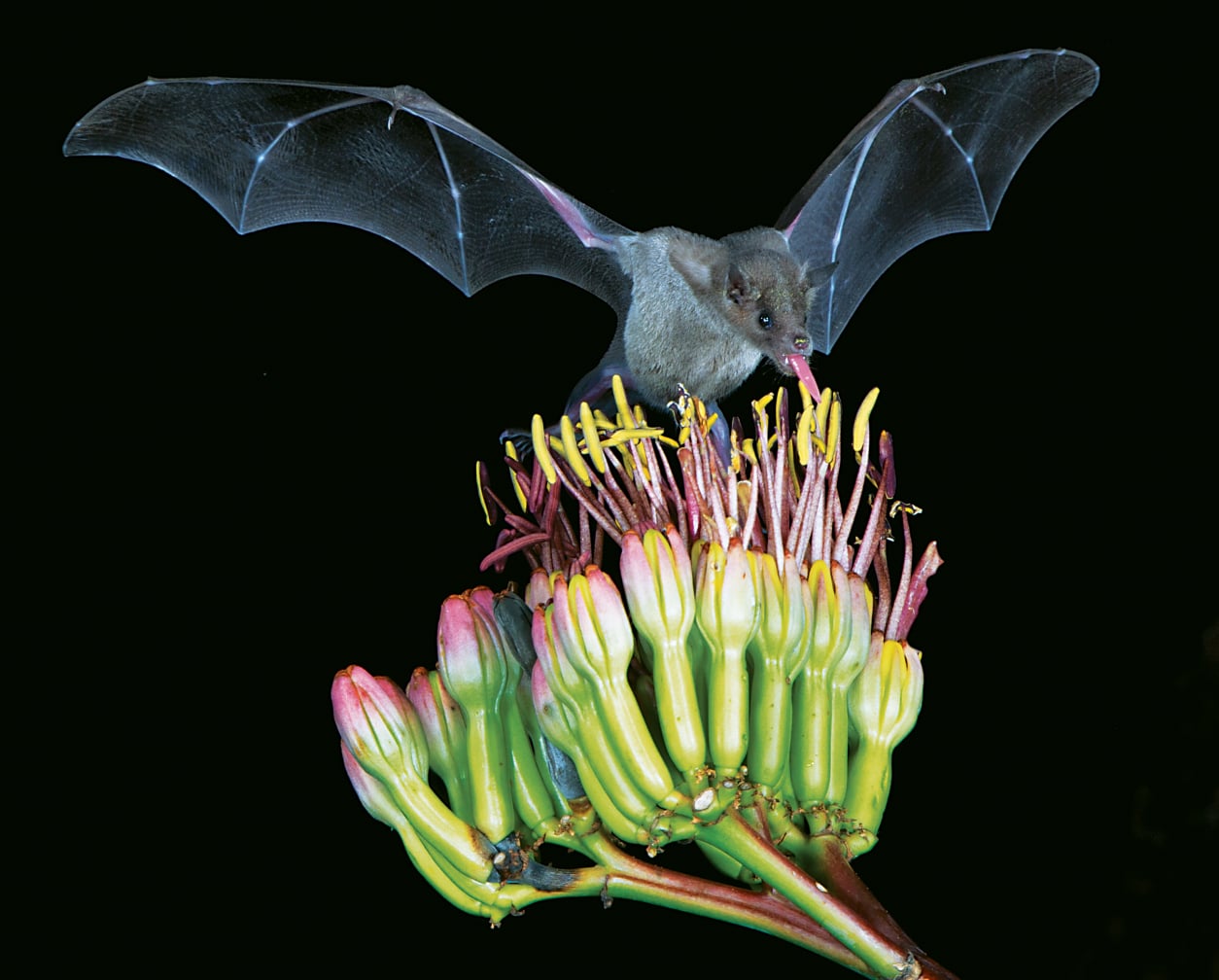
If you like your margaritas, you can thank a lesser long-nosed bat (Leptonycteris yerbabuenae) These medium-sized bats with short, brownish fur feed on and pollinate agave, the plant used to make tequila and mezcal. They use their long snouts to dig into night-blooming cacti, including the iconic desert saguaro. They also eat cactus fruits and might function as seed dispersers for some cacti species. Considered Near Threatened by the IUCN, Bat Conservation International’s Agave Restoration Initiative ensures that this and other species have reliable food sources during their migrations. So, raise a glass to nectar bats and agave. ¡Salud!
Northern Yellow-shouldered Bat

Once considered a subspecies of the little yellow-shouldered bat (Sturnia lilium), a genetic study of the northern yellow-shouldered bat (Sturnira parvidens) in 2013 revealed this medium-sized bat to be a separate species. Broad-headed, with large ears, this species has thick, soft reddish or yellowish fur, which can sometimes be dark grey. They roost in tree cavities, most commonly in the understory of tropical forests that lie close to water or farms and prefer younger forests that have regenerated after disturbance, feeding on fruit from plants that first take root. Scientists can thus use this species as an indicator of forest succession.
If you liked this Top 10 List, be sure to subscribe and never miss a Bat Pub post!
Paul Hormick, author of the environmental newsletter The Green Dispatch, has spent the last 22 years writing about music, food, and the environment.