Bats can wing it like no other!
09.23.26
By Alyson Brokaw
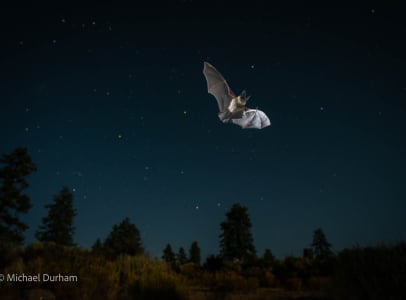
Some are fast, flying high and straight above us each night. Others do it more delicately, flitting and floating as they maneuver around leafy branches or scoop up tiny insects. As the only mammals capable of true flight, bats take to the skies every night in style.
Here are five fascinating things that make bat flight so extraordinary.
1. The Power of “Jazz Hands” 👐
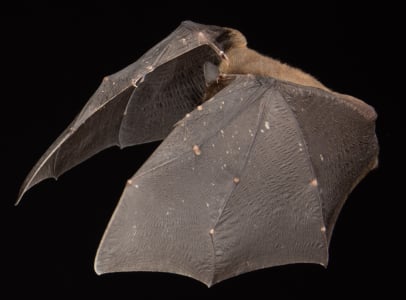
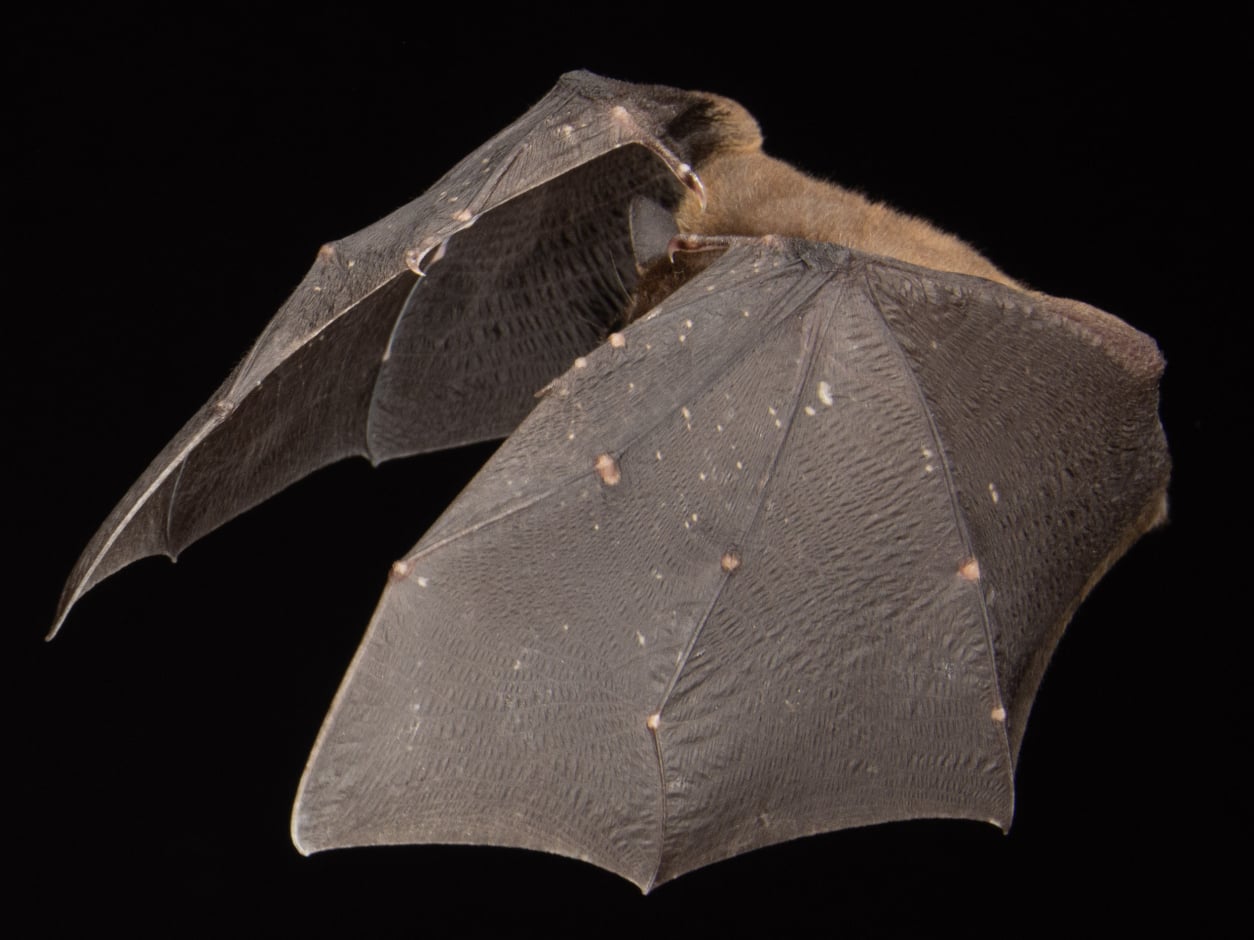
If you take a close look at the outstretched wings of a bat and then maybe back at your own hands, you might notice some similarities. Like us, bats have four long fingers and one thumb. Of course, bat hands also look pretty different from ours — namely, the length of those fingers and the large swaths of membrane stretched between each digit. If human hands were proportioned the same as bats, our fingers would be dragging on the ground. While impractical for humans, it works just great for bats.
Those long fingers and skin membranes provide a lot of surface area, which is important for considering the physics of flight. The membrane is also not just skin, but is full of tiny blood vessels, connective tissue and thin, flexible muscles. The same way we can individually bend each of our fingers, bats can do the same, allowing them to warp and flex their wings into a variety of shapes during flight. It’s this flexibility that helps bats fly with such impressive maneuverability, out-classing other flying animals in their ability to change direction and adjust to changes in air currents.
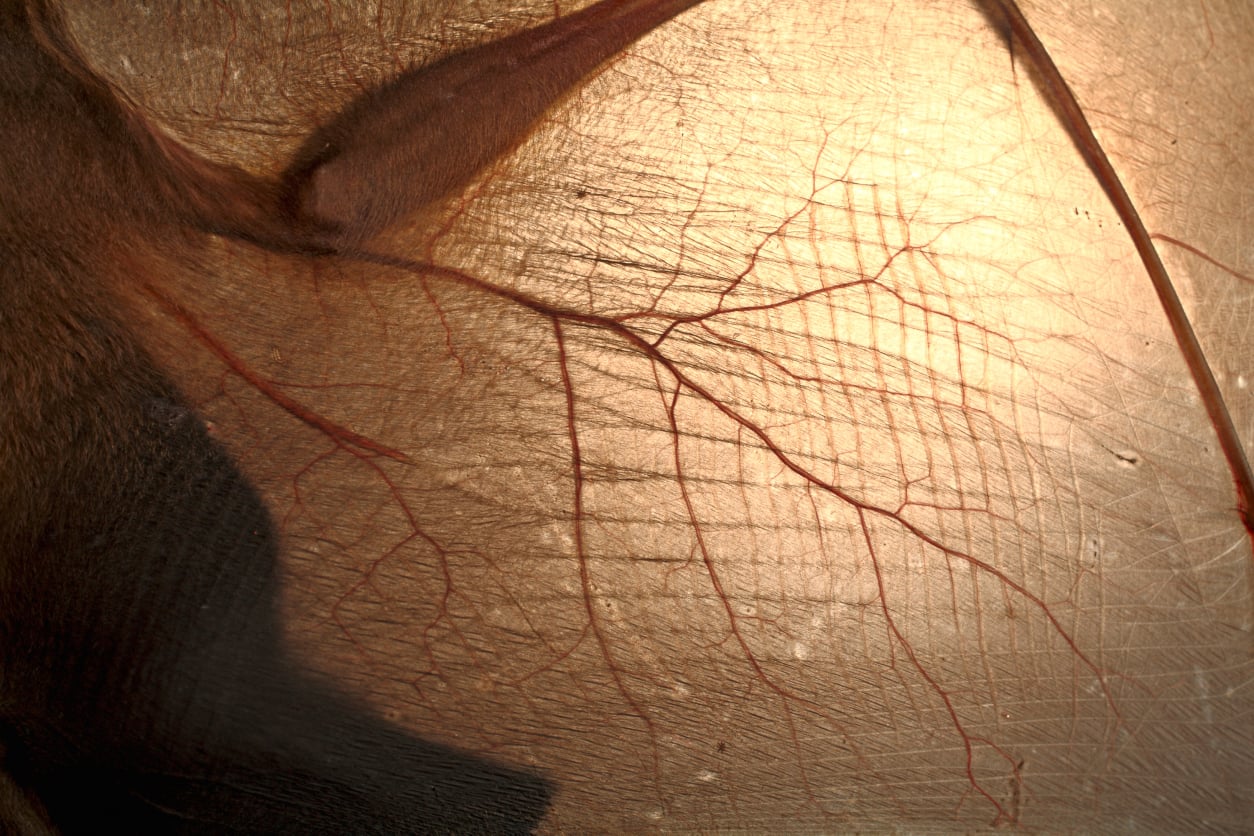
2. Tiny Hairs Keep Bats Afloat
All that wing surface area isn’t just good for providing lift; it helps bats sense the air as they fly. Scattered across bat wings are stiff, microscopic hairs, each associated with specialized touch receptors. Similar to a cat’s whiskers, these hairs act as tactile sensors, helping bats detect the flow of air over their wings.
Specifically, the neurons associated with these tiny hairs help bats detect the direction and speed of air. In one study, researchers experimentally removed these hairs from bat wings and observed how it changed their flight patterns. While bats were still able to fly, they were less maneuverable, flew faster, and made wider turns than when those hairs were intact. Other experiments measuring nerve activity at the touch receptors found that these hairs are sensitive to reversal of airflow. This kind of air disturbance or reversal happens as a bat slows down, or when they are close to stalling in mid-flight. This suggests these hairs give important, real-time aerodynamic feedback to help bats maintain stable, agile flight.
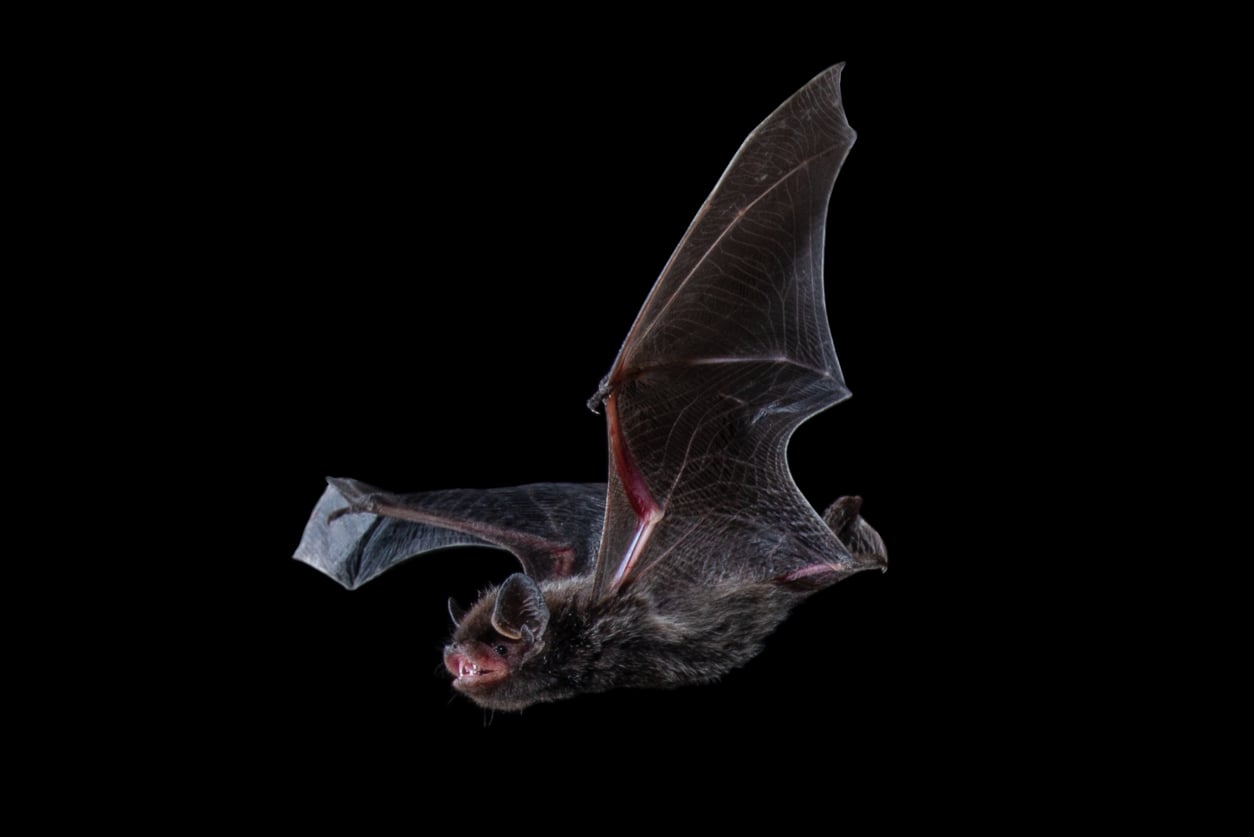
3. What Wings Whisper about Bat Behavior
While looks are not everything, when it comes to giving scientists clues about a bat’s habitats and behaviors, wing appearance is surprisingly helpful. Scientists quantify the appearance of wings with two main measurements. The first is aspect ratio, or ratio between the wing length and width. Bats with low aspect ratios have relatively short and wide wings, while bats with long, narrow wings have high aspect ratios. The second useful measurement is wing loading, the ratio of a bat’s body mass and the total wing area. This value gives information about how slow or fast a bat might be able to fly, or how well they can make tight turns in flight.
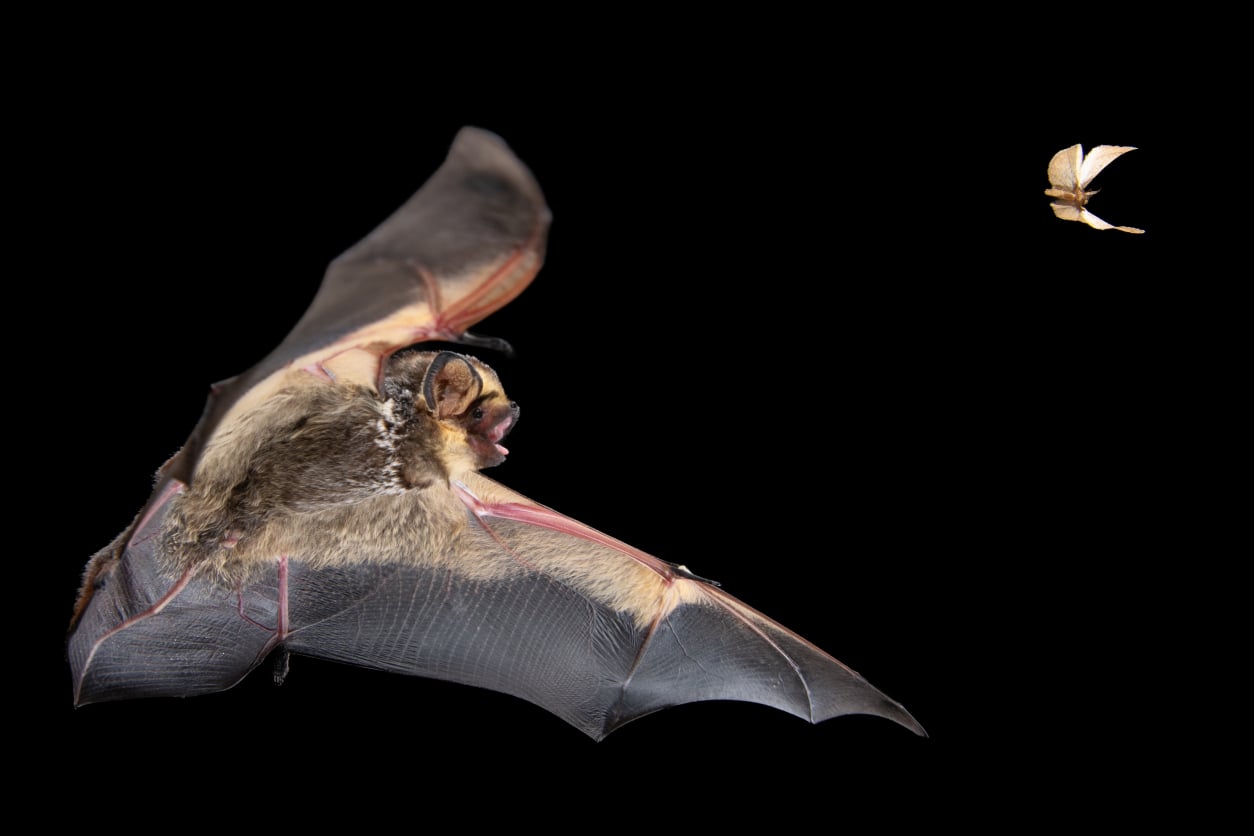
Looking at wing shapes, bats with high aspect ratios are associated with open-air habitats. This includes bats like the European free-tailed bat (Tadarida teniotis) and hoary bat (Lasiurus cinereus) who prefer flying up and over treelines, pursuing fast-flying insects in the wide, open skies. These bats also tend to have high wing loading, with relatively less wing area compared to their body. For bats living under the forest canopy, short, broad wings are a better fit. This allows bats like many Myotis species to flit easily amongst the leaves and branches of the forest understory, catching small, slow-flying insects. Fruit and nectar bats that need to be able to hover to feed from flowers or to grab fruit from a branch also tend to have wings with low aspect ratios and high wing loading.
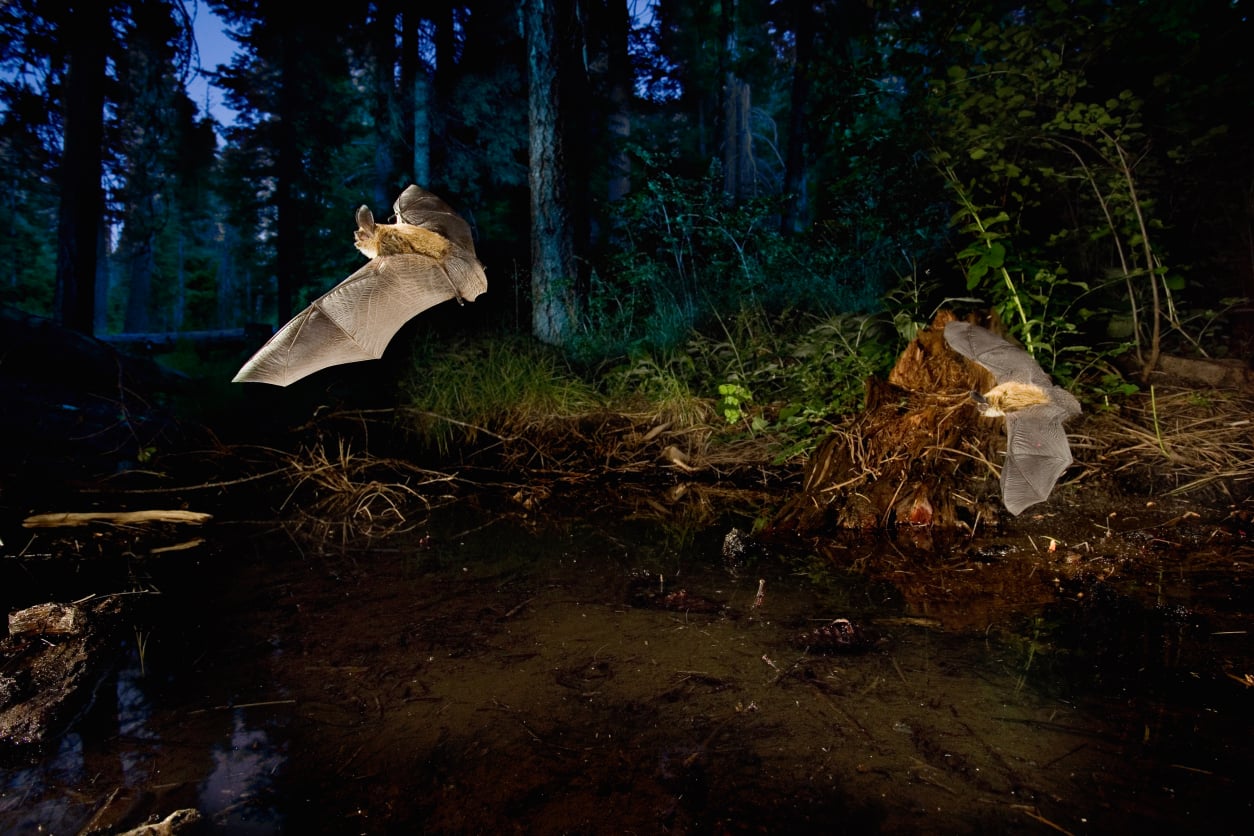
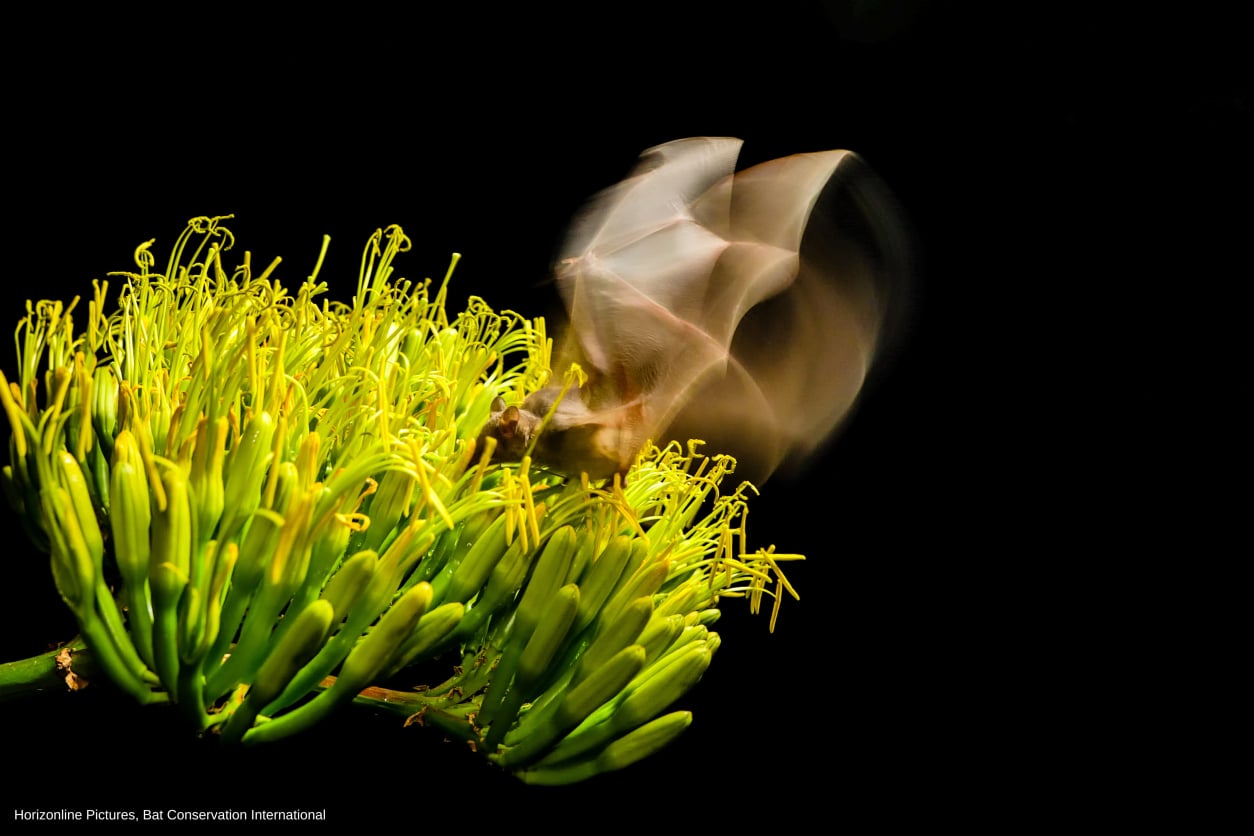
Aspect ratio and wing loading are just a few of the ways scientists can measure bat wings and estimate bat roles in their environment. Wing pointiness, finger length and other wing descriptors can also help give researchers insights into how bats operate in their environment, even when they can’t observe it for themselves.
4. A Need for Speed
If asked to name a fast animal, you might consider a cheetah, which can reach ground speeds of 75 miles per hour over short distances. You may also think of the peregrine falcon, who dives at prey from great heights and — with an assist from gravity — can reach speeds of over 200 miles per hour. But what if I told you that the fastest animal on Earth may actually be a bat?!
The fastest animal on Earth may actually be a bat!
In 2016, researchers attached small radio transmitters to the backs of Mexican free-tailed bats (T. brasiliensis) and tracked them from a small aircraft as they flew around the skies of west-central Texas. Relatively small bats with long, narrow wings, Mexican free-tailed bats are masters of heights, known for their high-altitude flights that can be tracked using weather radar. Despite this, researchers were surprised at just how fast these bats could fly, with some individuals reaching maximum level flight speeds of almost 100 miles per hour. Since then, researchers have used similar methods to track the speeds of other bats. While no one has broken the Mexican free-tailed bat record, their European cousins (T. teniotis) have been clocked reaching self-powered airspeeds of around 80 miles per hour.
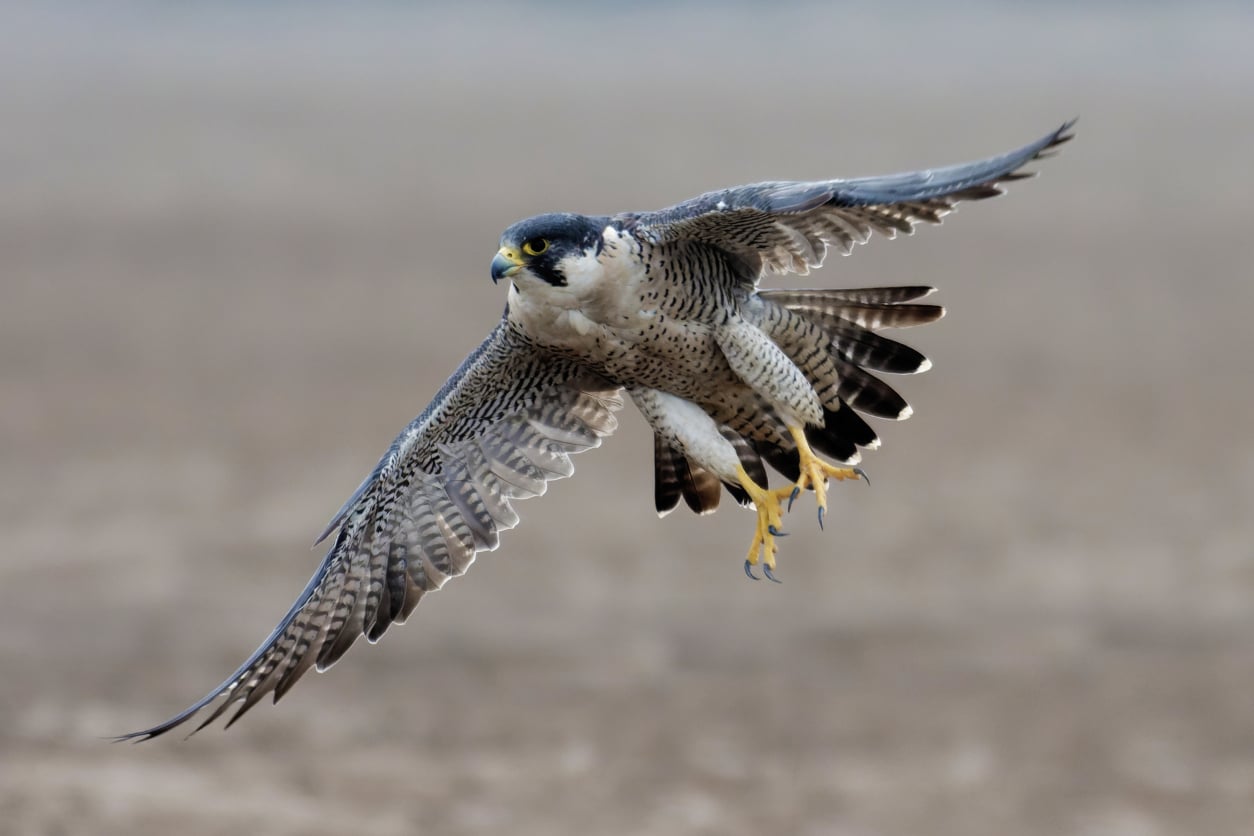
Peregrine falcons dive at prey from great heights and — with an assist from gravity — can reach speeds of over 200 miles per hour.(By Shiv’s fotografia/Wikimedia Commons
5. Upside Down Acro-bat-ics
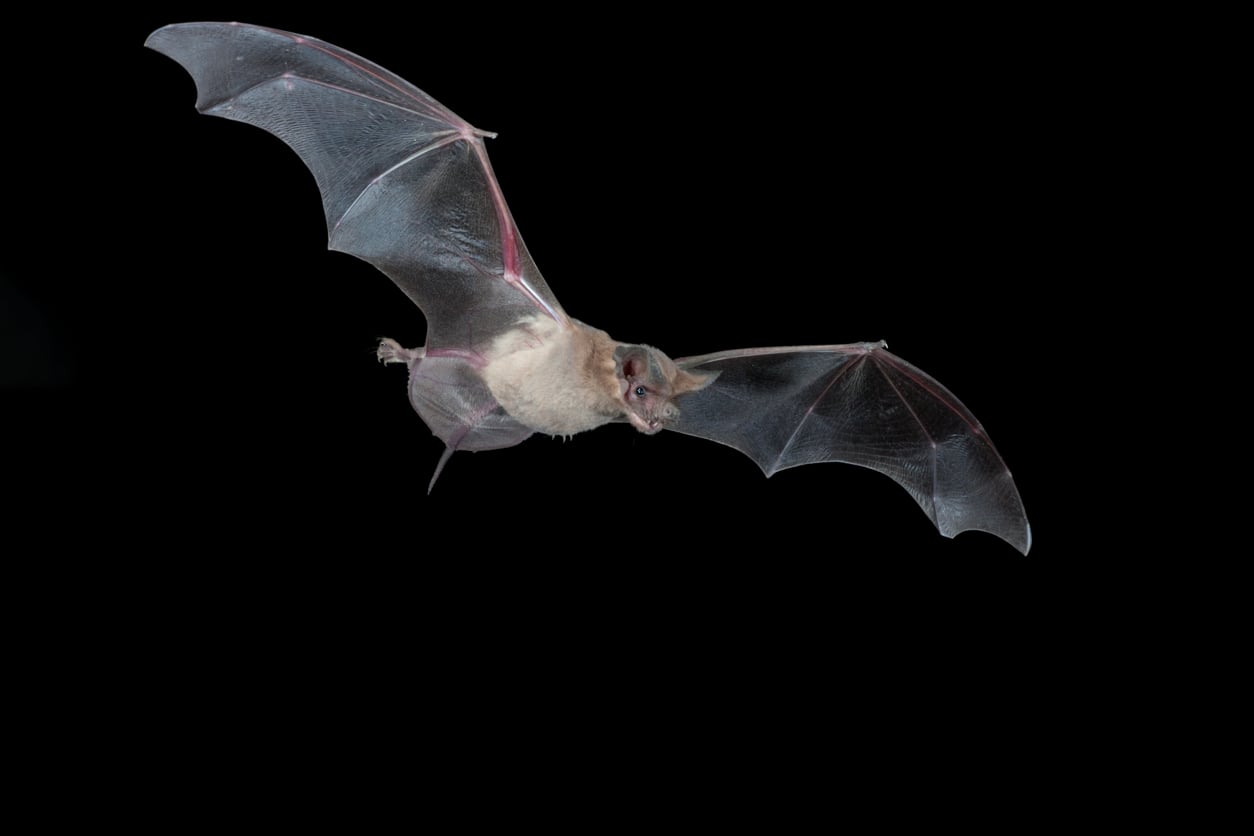
Flying is an impressive feat for all the bats, birds, and bugs who do it. But flying and then twisting and contorting to land upside down on a ceiling certainly deserves some extra applause. In order to get into a hanging position, bats must rapidly rotate their bodies just before contact while also slowing down enough to grab a surface securely.
Flying and then twisting and contorting to land upside down on a ceiling certainly deserves some extra applause.
High-speed video has revealed that bats perform this acrobatic feat by adjusting how they move their wings. As they approach a surface, they change their wingbeat pattern and briefly retract one wing while extending the other. This asymmetrical pose results in a change in the bat’s weight distribution and therefore its rotational inertia, helping them flip upside down midair.
While (almost) all bats show off their acrobatics for landing, different species vary in their exact technique. Some bats will hit the ceiling or roost surface with all four limbs, (4-point landing), while others grasp the ceiling with only their feet (2-point landings). In general, the more points that hit when a bat lands, the stronger the impact — like the difference between a sharp dive versus a belly flop into a pool. These landing styles also differ in how much rotation the bat must complete in order to land safely. Differences in landing styles may vary for several reasons, including how soft the landing surface is (a flexible leaf versus a hard cave wall) or what the bat wants to do next — crawling into a safe crevice may be easier when all four limbs have already hit the wall. From their flexible wings to their remarkable speed and acrobatics, bat flight continues to fascinate those of us who remain biologically stuck on the ground. It’s no wonder humans look to bats for engineering inspiration, from flapping drones to new approaches in flight robotics. The next time you see a bat silhouetted against the night sky, take a moment to appreciate all the little things that make its flight possible.
Alyson Brokaw, PhD is a behavioral ecologist, sensory biologist, science communicator, and a regular contributor to The Bat Pub. When not talking about bats, she can be found cuddling with her dog, exploring her local Pennsylvania woods and throwing plastic on the ultimate frisbee field.